February 15, 2026
February 15, 2026
Numbing Cream Before a Tattoo
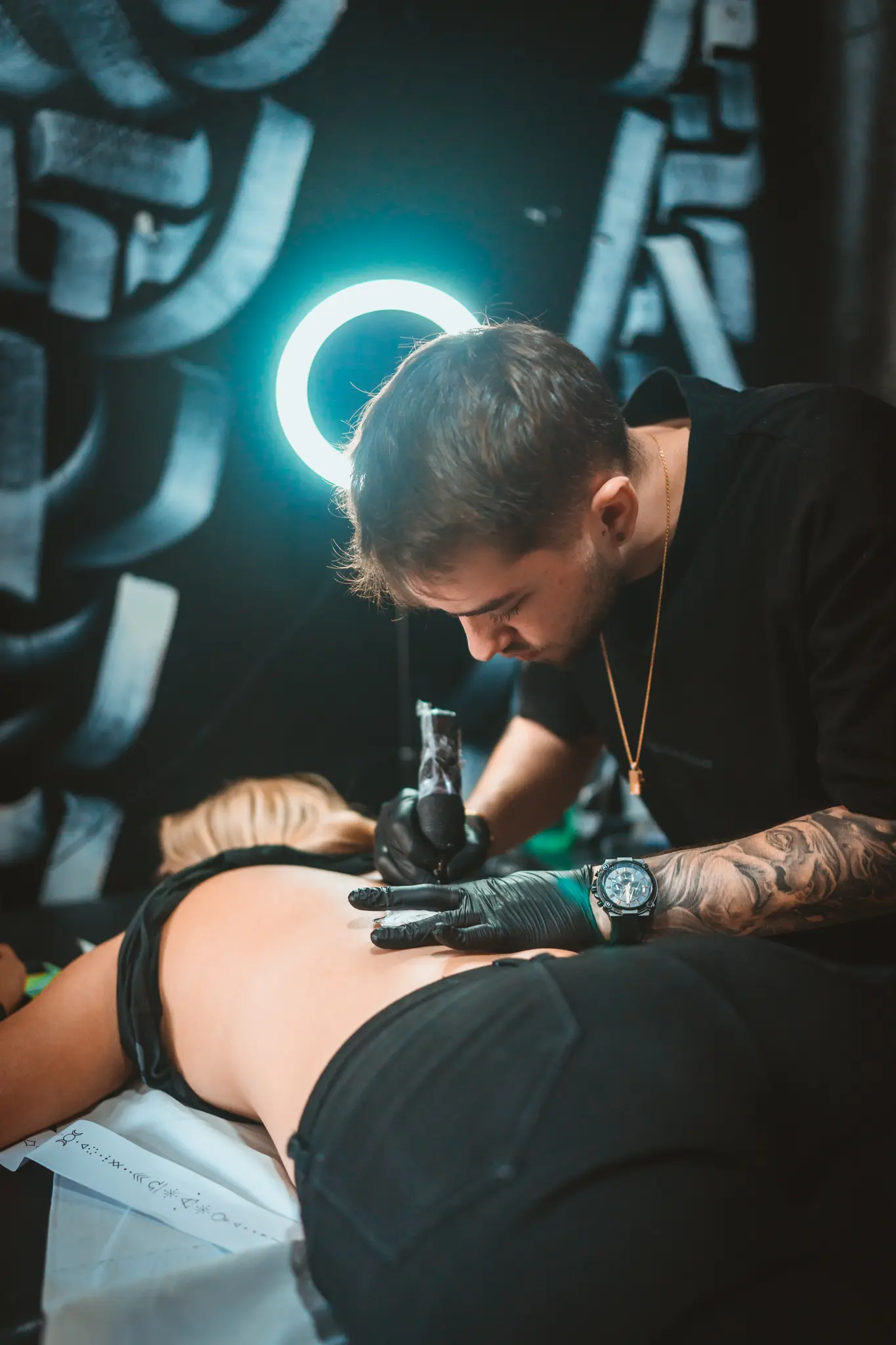
Does micro-realism hurt more than traditional tattoos, and should you use numbing cream? Görkem explains what actually works and his studio policy.
Does micro-realism hurt more than traditional tattoos, and should you use numbing cream? Görkem explains what actually works and his studio policy.
One of the most frequent questions: does single needle hurt more than traditional? Usually not. This guide explains what to expect, why pre-applied numbing cream often does more harm than good, and what I do instead.
The short answer
Micro-realism and fine line work generally hurt less than bold traditional tattoos, and you should not apply numbing cream before your appointment unless we agreed on it. The two points are connected: a calm body and untreated skin give the best result.
Micro-realism versus traditional: how the sensation differs
Fine line and micro-realism use small needle configurations, often a single needle. Less skin is disturbed per pass than with the large shader magnums used for bold, packed color. Clients typically describe a sharp, hot scratch rather than a deep, dull ache. Sessions are longer and more precise, so the sensation is more constant but lighter.
How much you feel depends on placement, your own sensitivity, sleep, food and stress. Ribs, sternum, inner arm, ankles and the spine are more sensitive than outer thigh, outer arm or calf. If you prepare properly with sleep, a proper meal and water, you will feel considerably less. The preparation guide on this site covers this in detail.
Why over-the-counter numbing cream is a problem
Do not apply numbing cream before your appointment without asking first. There are four reasons.
- Texture change. Creams, especially when covered with film, make the skin swollen, rubbery or spongy. Fine lines need firm, even skin to be placed with precision.
- Short duration. Most creams last 45 to 60 minutes. When they wear off, the sensation returns at once, which is often harder than the gradual build-up of an untreated session.
- Uneven effect. Absorption differs across the area, so some parts stay sensitive while others are numb. That makes the experience less predictable, not more comfortable.
- Skin reaction. Products containing lidocaine or similar agents can cause irritation or allergic reactions in some people. A reaction in the area of a fresh tattoo can affect healing.
What I do instead
If you are concerned about a sensitive placement, talk to me before the session. I carry professional numbing sprays and gels that can be used during the process, once the skin is open, if it is necessary. We also plan the session with breaks, a sensible length and a calm pace.
How to make the session easier
- Sleep a full night and eat a proper meal one to two hours before.
- Drink water in the days before, and no alcohol for at least 24 hours.
- Do not arrive stressed. Be early so you start calm.
- Breathe slowly and steadily, and tell me when you need a break.
Questions
If you have a specific concern about pain or about a particular placement, message me before your session and we decide together.



One of the most frequent questions: does single needle hurt more than traditional? Usually not. This guide explains what to expect, why pre-applied numbing cream often does more harm than good, and what I do instead.
The short answer
Micro-realism and fine line work generally hurt less than bold traditional tattoos, and you should not apply numbing cream before your appointment unless we agreed on it. The two points are connected: a calm body and untreated skin give the best result.
Micro-realism versus traditional: how the sensation differs
Fine line and micro-realism use small needle configurations, often a single needle. Less skin is disturbed per pass than with the large shader magnums used for bold, packed color. Clients typically describe a sharp, hot scratch rather than a deep, dull ache. Sessions are longer and more precise, so the sensation is more constant but lighter.
How much you feel depends on placement, your own sensitivity, sleep, food and stress. Ribs, sternum, inner arm, ankles and the spine are more sensitive than outer thigh, outer arm or calf. If you prepare properly with sleep, a proper meal and water, you will feel considerably less. The preparation guide on this site covers this in detail.
Why over-the-counter numbing cream is a problem
Do not apply numbing cream before your appointment without asking first. There are four reasons.
- Texture change. Creams, especially when covered with film, make the skin swollen, rubbery or spongy. Fine lines need firm, even skin to be placed with precision.
- Short duration. Most creams last 45 to 60 minutes. When they wear off, the sensation returns at once, which is often harder than the gradual build-up of an untreated session.
- Uneven effect. Absorption differs across the area, so some parts stay sensitive while others are numb. That makes the experience less predictable, not more comfortable.
- Skin reaction. Products containing lidocaine or similar agents can cause irritation or allergic reactions in some people. A reaction in the area of a fresh tattoo can affect healing.
What I do instead
If you are concerned about a sensitive placement, talk to me before the session. I carry professional numbing sprays and gels that can be used during the process, once the skin is open, if it is necessary. We also plan the session with breaks, a sensible length and a calm pace.
How to make the session easier
- Sleep a full night and eat a proper meal one to two hours before.
- Drink water in the days before, and no alcohol for at least 24 hours.
- Do not arrive stressed. Be early so you start calm.
- Breathe slowly and steadily, and tell me when you need a break.
Questions
If you have a specific concern about pain or about a particular placement, message me before your session and we decide together.